
Rubberwood Hevea brasiliensis
Timber from the rubber tree’s "second life" after 20–30 years of latex tapping. Pale, forgiving to work — and the most convincing circular-economy story in Vietnamese wood.
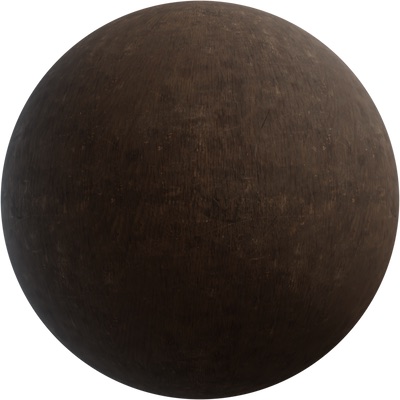
Origin: the second life of the rubber plantation
Rubber trees are planted for latex; after 20–30 years, when yields decline, the plantation is cleared and replanted — and the trunks become sawn timber. No tree is felled for its wood alone: rubberwood is the planned by-product of the latex industry, with documented plantations and clear clearance cycles in Vietnam’s southeast and central highlands.
EUDR & Lacey Act
As an industrial plantation timber with documented clearance, rubberwood sits in the low-risk EUDR category and is straightforward to declare under the Lacey Act. Plantation coordinates and clearance records form the basis of the due-diligence dossier — Archilion standardizes that dossier per shipment for its partner workshops.
Physical properties
Qualitative descriptions from workshop practice — not a lab data sheet.
Hardness
Medium — comparable to European beech, robust enough for almost all indoor furniture.
Color
Pale cream to light yellow, even — an ideal base for stains of any tone.
Grain
Straight, subtle, understated — a "quiet" surface suited to minimalist aesthetics.
Stability
Good after correct kiln drying and treatment — fresh-sawn wood must be treated promptly against fungal staining.
Workability
Very easy to saw, rout and drill; glues and screws excellently — the most forgiving wood in the shop.
Durability
Long-lived indoors; unsuitable outdoors, as it has no natural decay resistance.
Furniture applications
- Chair and sofa frames, table legs
- Cabinets, shelving, beds and bedroom furniture
- Children's furniture (smooth, splinter-free surfaces)
- Desk tops and indoor kitchenware
Compared to European species
The counterpart of European beech in hardness and machining feel — the same role as the versatile "joiner’s wood" of the workshop. The biggest differences: rubberwood is paler, takes stain more evenly, and carries a circular story that beech does not have.
Frequently asked questions
What EU and US buyers most often ask about this species.
Is rubberwood genuinely sustainable?
Yes — it comes from trees that have completed their latex life cycle; no tree is felled for the wood alone. Plantations are replanted cyclically, so supply is stable and deforestation-free.
Does rubberwood meet EUDR and Lacey Act requirements?
It falls in the low-risk category: documented industrial plantations, determinable coordinates, planned clearance. The one condition is a properly built dossier — rubber is itself an EUDR commodity, so full due diligence still applies.
Can rubberwood be used outdoors?
No — it has no natural moisture or decay resistance and is strictly an indoor timber. In return, it is durable and dimensionally stable indoors once properly dried and treated.
Why is rubberwood often stained to imitate other woods?
Because of its pale, even base color and very uniform stain uptake — from oak tones to walnut to matte black without blotching. For buyers this is the route to premium looks at an accessible price, as long as the species is declared honestly.